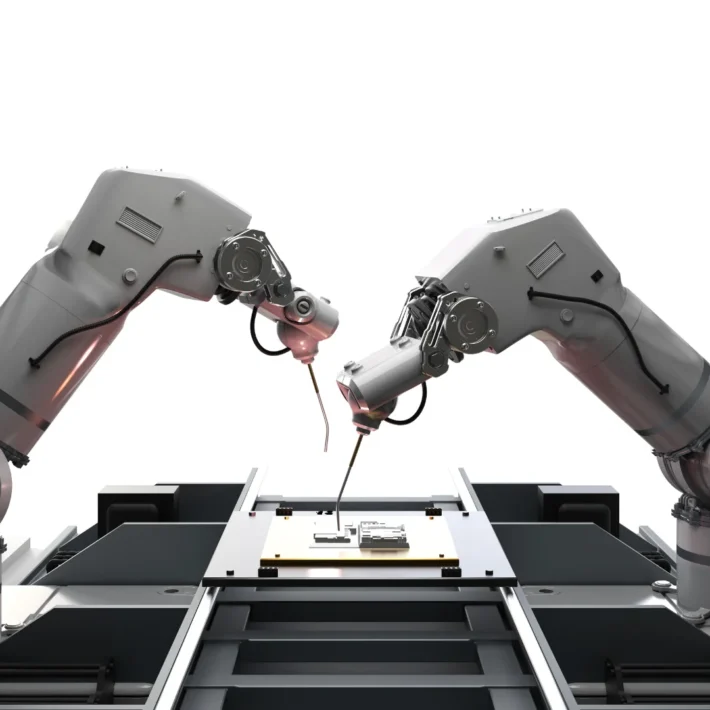
Robotic Process Automation: The Game Changer for Operations Leaders In 2025

There was a time when “operations leaders” had to manually sort invoices, approve purchase orders, and weep quietly into their coffee mugs while waiting for SAP to load. Good times. But in 2025? It’s a brave new world—and Robotic Process Automation (RPA) is holding the whip.
Let’s get one thing straight right now: Robotic Process Automation is not about Terminator-style robots running your office. That’s HR’s job. It’s about software bots that do all the boring, soul-sucking stuff that makes operations leaders lose years off their life expectancy.
Key takeaway: If you’re an operations leader and RPA isn’t on your radar, congratulations—you’re the proud captain of a sinking ship. This article is your lifeboat.
Stick around and you’ll learn:
- What the heck RPA is (minus the tech-speak migraine)
- Why hyperautomation sounds like a Marvel villain but is actually your new best friend
- How operations leaders are becoming automation overlords
- Real companies that RPA’d their way out of chaos
Understanding Robotic Process Automation (RPA): Or How I Learned to Stop Worrying and Love the Bots
RPA, or Robotic Process Automation, is what happens when you’re so tired of repetitive work that you train a robot to hate your job for you. Picture this: you’ve got a task so mind-numbingly dull that even your Spotify playlist can’t distract you anymore. That’s RPA’s playground.
Now imagine giving Siri an Excel certification, pumping her full of espresso, slapping her with a strict dress code, and telling her to never, ever sleep. That’s your RPA bot: digital, obedient, caffeine-fueled, and emotionally unavailable.
Operations leaders, if you’ve ever thought, “There’s got to be a better way to do this than making interns cry,” congratulations. RPA is your slightly robotic fairy godmother.
Here’s what these bots can do:
- Log into applications without whining about passwords
- Copy-paste with frightening speed and no typos
- Fill out forms like a bureaucratic ninja
- Scrape data like they’re preparing for an Excel-themed apocalypse
- Send emails that don’t require coffee breaks or passive-aggressive emojis
Basically, they do the digital equivalent of dishwashing. And they never ask for PTO.
Key Components of RPA: AKA Meet the Crew Behind the Curtain
| Component | Description |
|---|---|
| Software Bots | The quiet little overachievers that do the actual work while you’re in meetings. |
| Workflow Tools | Think of this as your neurotic intern with a Kanban board addiction. |
| Orchestration | This is the boss bot, the Gandalf of the process, directing other bots like a maestro who’s had enough of your disorganization. |
Historical Context: The Evolution of RPA
The roots of Robotic Process Automation (RPA) trace back to the 1990s with the rise of screen scraping—an early and rudimentary attempt at automating digital tasks. While effective in its time, it was limited, clunky, and heavily reliant on brittle front-end interactions.
By 2016, technology had advanced and operational demands had intensified. RPA matured. It became smarter, more scalable, and far more strategic. What was once a tactical tool evolved into a competitive advantage.
By 2020, RPA had cemented itself as a core capability in digital transformation. And now, in 2025, it’s no longer a trend—it’s a fundamental part of modern operations strategy. For leaders, it represents the shift from firefighting to future-shaping.
Why RPA Is Built for Operational Efficiency
RPA is tailor-made for leaders who value precision, consistency, and scalability. It doesn’t need handholding or check-ins. It simply follows the rules and executes—accurately and endlessly. No distractions. No delays. Just results.
For operations teams, it means fewer repetitive tasks, fewer human errors, and more time spent on strategic work that actually moves the business forward.
The Rise of Hyperautomation: RPA’s Intelligent Evolution
What Is Hyperautomation?
Hyperautomation is the next step in the evolution of digital operations. It integrates RPA with artificial intelligence (AI), machine learning (ML), and natural language processing (NLP) to automate not just tasks—but entire end-to-end processes.
Where RPA follows instructions, hyperautomation interprets, learns, and adapts. It enables systems to make informed decisions in real time and continuously improve over time.
In essence, hyperautomation transforms operations from rule-based automation into dynamic, intelligent orchestration.
AI and ML: Enabling Smarter Automation
| Tool | Function |
|---|---|
| Artificial Intelligence | The analytical engine. It identifies patterns, makes decisions, and solves complex problems without human intervention. |
| Machine Learning | The learning layer. It improves accuracy and outcomes over time by analyzing historical data. |
| Natural Language Processing | The communication bridge. It understands and responds to human language in emails, messages, and documents. |
Example in Action: Consider a refund request. Traditionally, it would require multiple approvals and manual data entry. A hyperautomated system can extract relevant information from the email, validate it against policies, calculate the refund, and trigger a response—autonomously and instantly.
The result? Faster resolutions, better customer experiences, and more time for your teams to focus on complex, value-added tasks.
Hyperautomation vs. RPA: A Strategic Comparison
| Feature | RPA | Hyperautomation |
|---|---|---|
| Scope | Task-based automation | Full process automation |
| Intelligence | Rule-based logic | AI-driven decision-making |
| Learning | Static, predefined | Dynamic, continuous improvement |
| Cost Savings | Moderate operational efficiency gains | Transformational savings and scale |
| Business Impact | Incremental improvement | Strategic differentiation and innovation |
Why Hyperautomation is the Future of Operations
Hyperautomation isn’t about replacing teams—it’s about empowering them. By offloading repetitive, rules-based work to intelligent systems, your teams are free to focus on innovation, customer engagement, and strategic growth.
It’s more than automation. It’s transformation—built to scale, evolve, and future-proof your operations.
Trends Driving Hyperautomation In 2025
Let’s talk about what’s fueling this robot-powered revolution. And no, it’s not sci-fi dreams or Skynet. It’s cold, hard facts—and Operations Leaders are paying attention.
The Data is Clear: Automation is the New Black
Forget status quo. The new trend? Automate or evaporate.
| Automation Stat | What It Actually Means |
|---|---|
| 92% of enterprises will have automation by 2026 | Basically, if you’re not automating, you’re the weird one. |
| 73% of Operations Leaders prefer RPA to hiring more humans | Because robots don’t take PTO, sick days, or complain about the breakroom coffee. |
| 62% of CFOs say RPA increased operational resilience | Translation: “We no longer panic when Karen’s out with the flu.” |
Why the Big Shift? Let’s Look at the Why Behind the Hype
Enterprises aren’t just automating for the buzzword bingo win. They’re solving real problems—and fast.
Table: Why Enterprises are Chugging the Hyperautomation Kool-Aid
| Reason | % of Respondents |
|---|---|
| Need for scalability | 85% |
| Cost reduction | 79% |
| Faster time-to-market | 68% |
| Talent shortages | 64% |
| Burnout is real, man | 100% (probably) |
To all Operations Leaders, here’s the kicker: your competition is sprinting while you’re still tying your laces. They’re automating approvals, workflows, data entries… heck, at this rate, your morning coffee might be next.
And no, this isn’t about replacing people—it’s about unleashing them. Giving your team room to breathe, think, and do cool stuff.
Impact on Operations Leaders
Let’s get real: before automation, your job as an Operations Leader was basically adult babysitting. You were running around putting out fires, fixing broken systems, and manually juggling a million tiny details. Sound familiar?
Table: What Changes for Operations Leaders in 2025
| Old Reality | New Reality |
|---|---|
| Micromanaging mindless tasks | Delegating them to trusty bots |
| Drowning in dashboards | Creating dashboards that matter |
| Flying blind with guesswork | Making decisions with real-time data |
| Burned out and behind | Empowered and one step ahead |
Welcome to the New Age of Operations Leadership
You’re not just surviving anymore. You’re thriving, thanks to:
- Strategic Freedom: Less time chasing tasks means more time dreaming big.
- Bot-Supervised Execution: While you sip your third cup of coffee, your digital workforce is hard at work.
- Crystal-Clear Visibility: Real-time dashboards that make Excel look like a typewriter.
Table: Then vs. Now for Operations Leaders
| Then (Pre-RPA) | Now (Post-RPA) |
|---|---|
| Chained to manual processes | Focused on strategic initiatives |
| Spreadsheet swamp | Clean, automated insights |
| Always reacting | Proactively innovating |
| “Barely keeping up” vibes | “Ninja-in-charge” energy |
“RPA allowed us to scale without scaling headcount. I sleep now.”
— Jessie Morgan, Director of Operations, Synergix Solutions
Reality Check for Modern Operations Leaders
You’re not in charge of bots instead of people—you’re empowering both to be better. You’re the air traffic controller of productivity, guiding all the planes without breaking a sweat.
Case Studies: RPA in the Wild
Time to stop talking and start showing. Here’s how real companies are turning to automation—and how Operations Leaders are winning the day (and getting more sleep).
Case Study #1: Retail Giant Unleashes the Bots
Company: MegaMart Inc.
Industry: Retail / E-commerce
The Struggle:
Order processing was a hot mess.
Customers were left in limbo, and the Ops team? Drowning in manual entries, late shipments, and daily complaint escalations. It was chaos with a barcode.
The Fix:
Enter RPA. Bots were deployed to:
- Auto-process incoming orders
- Update customers on shipping status in real-time
- Generate invoices instantly
Suddenly, the chaos turned into a choreography.
The Win:
Productivity skyrocketed. So did customer satisfaction. And Operations Leaders finally got to breathe.
| Metric | Before RPA | After RPA |
|---|---|---|
| Order Processing Time | 48 hours | 14 hours |
| Manual Touchpoints | 6 | 1 (bot-reviewed) |
| Customer Complaints | Daily | Rarely (if ever) |
Operations Takeaway: The Ops team didn’t shrink—they got supercharged. Instead of spending hours on grunt work, they focused on scaling fulfillment and launching new shipping programs. RPA didn’t take jobs—it took the boring parts of jobs.
Case Study #2: The Bank That Beat Paper Overload
Company: CapitalCore Bank
Industry: Financial Services
The Struggle:
Loan applications were stacking up like bad Tinder matches—too many, too slow, and too repetitive. Manual document reviews took days. Risk assessments were delayed. Customers were losing patience.
The Fix:
They paired RPA bots with AI to:
- Instantly scan and verify documents
- Auto-sort applications based on complexity
- Flag high-risk loans in real-time for human review
No more bottlenecks. Just smart automation with human oversight where it mattered.
The Win:
End-to-end loan processing time dropped from weeks to hours.
| Process Step | Manual Time | Automated Time |
|---|---|---|
| Document Review | 4 days | 30 minutes |
| Risk Flagging | 2 days | Instant |
| Final Approval Turnaround | 8 days | 2.5 hours |
Operations Takeaway: CapitalCore didn’t just speed things up—they transformed how decisions were made. Operations Leaders went from paper pushers to process architects, building a system that’s faster, smarter, and actually enjoyable to work in.
“I used to spend half my day on approvals. Now? My bots do it while I drink tea.”
— Maya Park, Operations Leader, NovaBank
Obstacles, Pitfalls & Rookie Mistakes
Operations Leaders, listen up: RPA is not a magic wand. If your process is held together by duct tape and good intentions, slapping a bot on top of it won’t help. It’ll just automate your disaster at lightning speed.
Let’s get real. Automation is only as good as the process you apply it to. If your workflow is a flaming trash heap, all RPA will do is fan the flames.
Table: Is Your Process Ready for Automation?
| Process Quality | What Happens If You Automate It | Verdict |
|---|---|---|
| Clean, repeatable, logical | Works like a dream | Automate away |
| Somewhat messy | Bot will stumble, but fixable | Needs cleanup first |
| Full chaos | Congratulations, you built Skynet | Do. Not. Automate. |
Top Mistakes Operations Leaders Make
Automation is powerful—but misused, it’s a hot mess with a time bomb attached. Here’s where Operations Leaders often fumble:
1. Automating the Wrong Processes
Don’t automate garbage. If your team’s drowning in redundant approvals, broken spreadsheets, and unclear ownership, fix that first. Bots are not janitors—they follow instructions, not chaos.
Pro Tip: Start small. Pick a clean, simple process. Prove the value. Then scale.
2. Ignoring IT (a.k.a. Your New Best Friend)
IT has the keys to the castle—data access, systems integration, security protocols. You need them, even if your inner control freak screams otherwise
| Why You Need IT | What Happens If You Don’t |
|---|---|
| Secure access to internal apps | Your bot gets locked out |
| Data governance compliance | You accidentally leak customer data |
| Smooth integration | Frankenstein’d systems galore |
3. Not Measuring Success
If you can’t prove ROI, your CFO will assume your RPA pilot is just a very expensive paperweight.
Track these, or you’re toast:
- Time saved per process
- Errors reduced
- Headcount reallocation
- Cost per bot vs. human cost
Table: Metrics Every Ops Leader Should Track
| KPI | Why It Matters |
|---|---|
| Process cycle time | Shows how much faster you’re moving |
| Human hours saved | Great for showing cost reduction |
| Error rate | Lower = better, always |
| Bot uptime | Bots don’t sleep, but they can break |
| Manual intervention required | Should drop over time |
“Our first RPA project was a disaster. Then we hired someone who actually knew what they were doing. Shocking, I know.”
— Thomas Lee, Head of Operations, TechNova
You’re not alone, Thomas. We’ve all tried to duct-tape a dashboard at 2 AM. Lesson learned.
What the Future Holds
RPA is evolving fast. For Operations Leaders, the future is bright—and fully automated. By 2027, your bot army won’t just be real—it’ll be essential.
Key Trends to Watch:
1. AI-Powered RPA Becomes the Norm
Bots won’t just follow rules—they’ll make smart decisions. Think invoice triaging, fraud detection, and predictive workflows.
2. Ops Leaders Who Code (Or at Least Pretend To)
You don’t need to be a dev. But knowing your way around low-code platforms? That’s your next superpower.
3. Full Ecosystem Automation
From HR to finance to supply chain—bots will run the background while humans steer the ship. It’s not science fiction. It’s Tuesday.
Table: The Future of Operations Leaders with RPA
| Year | RPA Adoption | Role of Operations Leaders |
|---|---|---|
| 2025 | Mainstream | Strategic automation architects |
| 2026 | Widespread | Innovation enablers and transformation leads |
| 2027 | Ubiquitous | Automation-first thinkers (plus honorary CTOs) |
Table: Skills Operations Leaders Will Need by 2027
| Skill | Why It Matters |
|---|---|
| Process mapping | Know what you’re automating, inside and out |
| Low-code/no-code tools | Fast prototyping without dev bottlenecks |
| Change management | Humans need to adapt just as much as bots do |
| Cross-functional leadership | RPA touches everything—so will you |
| Data-driven decision-making | “Feels right” won’t cut it in an automated world |
Table: What Bots Will Handle vs What Humans Will Handle
| Bots Will Do | Humans Will Do |
|---|---|
| Data entry | Strategic planning |
| Routine approvals | Creative problem solving |
| Compliance checks | Relationship management |
| Report generation | Innovation and growth projects |
| Inventory monitoring | Leadership and cross-team alignment |
Conclusion: Embrace the Bots or Die Trying
Operations Leaders, this is your wake-up call: RPA isn’t a trend—it’s your escape route from the hamster wheel of admin tasks. It’s your ticket to actual leadership, not just inbox babysitting.
Yes, it’s a little scary. But so was Excel when it first showed up.
Table: The Before-and-After of RPA for Ops Leaders
| Before RPA | After RPA |
|---|---|
| “Let me check that manually…” | “The bot already did it.” |
| “We’re behind schedule again.” | “We scaled this process in 3 days.” |
| “I’m too busy for strategy.” | “I finally have time to lead.” |
“RPA didn’t just change how we work—it changed how we think. I’ll never go back.”
— Aria Lang, Chief Operating Officer, FlowRite Global
So go forth. Automate. Dominate.
And for the love of ops… please stop manually approving those expense reports.